Japan travel · Call translation
T-Mobile translates calls for free — so why Yovoca?
T-Mobile built real-time translation straight into its network: dial a code mid-call and it interprets both sides, in dozens of languages, with no app on either phone. It's a genuinely strong feature. But it's tied to one carrier, one plan tier, and one place — and like the phone's own translator, it leaves you with no number of your own. Here's an honest, side-by-side look.
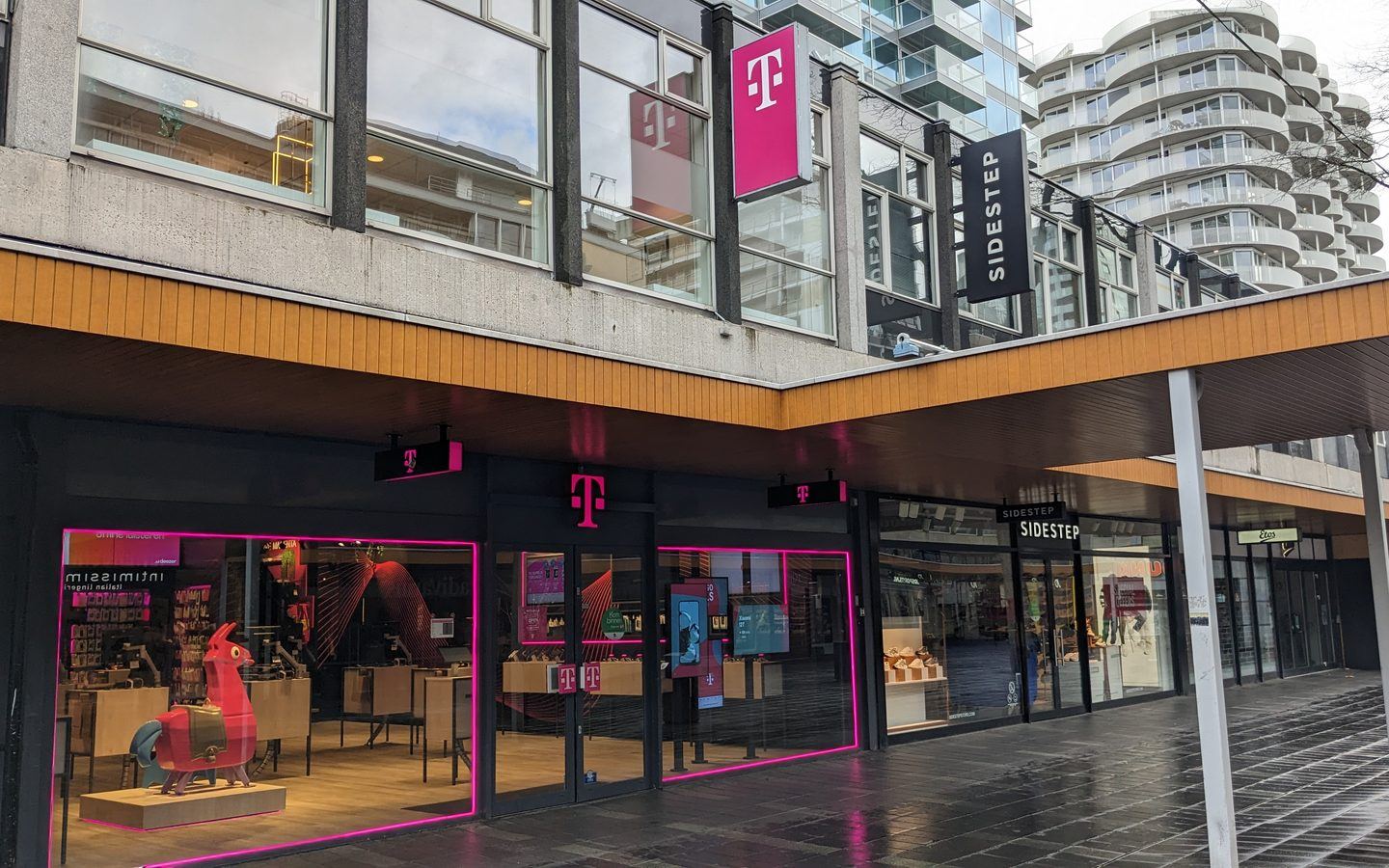
_02.jpg)
If you're a T-Mobile postpaid customer in the United States, Live Translation is one of the best deals going: it's free, it works on basically any phone you call, and neither of you installs a thing. So it's a fair question — with your carrier doing this at no extra cost, why look at a dedicated tool like Yovoca? The honest answer is that carrier translation is brilliant right up to the edge of its network. Off T-Mobile, off the right plan, or off in another country, it simply isn't there — and that's exactly where a lot of travel calls happen.
The honest version
T-Mobile Live Translation is excellent — free, app-free on both ends, and live in dozens of languages — if you're an eligible T-Mobile postpaid member. Yovoca is built for a narrower, harder job: calling a business in Japan (or elsewhere in Asia) from any carrier and any phone, with a number that's yours so they can reach you back. Where you're on the right carrier and plan, T-Mobile's free feature usually wins. Where you aren't — a different carrier, a roaming SIM, a borrowed handset — it isn't an option at all.
At a glance
| T-Mobile Live Translation | Yovoca | |
|---|---|---|
| What it is | Real-time call translation built into the carrier's network | A call you make with a live translator — plus a bilingual number that's yours |
| Languages on calls | 80+ languages, Japanese included | Built for the languages you travel into, including Japanese |
| Real-time, on a live call | ✓ dial *87* mid-call | ✓ live two-way on the call |
| Who can use it carrier / plan / region | Eligible T-Mobile postpaid members, on the T-Mobile network | ✓ any carrier or plan — bring the phone you have |
| Device / app needed | Any phone on the network — even a basic flip phone, no app | Any phone — Android, an older iPhone, even a hotel landline |
| Other side needs an app? | No — they can be on any carrier, any handset | No — even a landline (a genuine tie) |
| Works abroad / while roaming | Anywhere with T-Mobile 4G/5G voice — calls to 200+ countries, roaming in 85+ | ✓ not tied to a home network — you place the call |
| A number that's yours so they can call you back | ✗ — it's a feature on your existing line, not a new number | ✓ planned |
| In your own voice | ✓ T-Mobile says the network learns and uses your own voice | ✓ your cloned voice (planned) |
| Using it from a phone that isn't yours | ✗ — it's tied to your T-Mobile line | Your phone = recognised by caller ID; a borrowed / hotel phone = a short PIN (access-number, a P1 feature) |
| Cost | Free in beta; T-Mobile says you can add it to your line once it launches | Early access — prepaid / trip packs, billed by where you call |
| Available today | Beta, by waitlist — T-Mobile says "coming soon for all" members | Early access — join the list |
| Best for | T-Mobile postpaid customers translating calls on their own line | Calling Japan/Asia, from any carrier or device, with a number that's yours |
Where T-Mobile Live Translation is the right call
Credit where it's due — for a large group of people, the carrier feature is the sensible choice, and we'd tell you to use it:
- You're an eligible T-Mobile postpaid member, calling from the T-Mobile network.
- Japanese — or any of the 80-plus languages it covers — is on the list, and it interprets both sides once you dial *87*. T-Mobile says it reproduces your own voice, not a stand-in relay voice.
- You don't need anyone to call you back afterwards, and you don't need a number of your own.
In that case, start the call, dial the code, and let the network do the work — none of the processing happens on your handset, so the person on the other end can be on any carrier and any phone, right down to a basic flip phone, with nothing to install. Free and built into your plan beats a separate tool every time it actually covers the call. (It's voice calls only, accuracy isn't guaranteed, and it doesn't work on 911 or 988 emergency calls.)
Where it stops — and travel is the clearest example
The catch is that carrier translation lives inside one carrier's network, so the calls travellers most dread often fall just outside it:
- It's carrier- and plan-locked. Live Translation is for eligible T-Mobile postpaid members. If you're on Verizon, AT&T, an MVNO, a prepaid plan, or any non-US carrier, there's nothing to dial. A feature that depends on whose SIM is in your phone can't be the answer for everyone.
- A T-Mobile line has to be on the call. T-Mobile says only one of the two phones needs to be on its network — but that phone has to exist. Coverage itself is generous (anywhere with T-Mobile 4G or 5G voice, calls to 200+ countries, roaming in 85+), so the real gate is the account, not the map.
- It only covers ordinary person-to-person calls. T-Mobile excludes 911 and 988, voicemail, conference calls, and calls inside apps such as FaceTime or WhatsApp.
- It gives you no number. Like the phone's own translator, it interprets the call in front of you and then it's done. It doesn't give you a line a business can call back, or one that can take a verification text. The moment the conversation needs a callback, the feature's job is already over.
What Yovoca does differently — and honestly
Yovoca is a dedicated call layer for exactly these gaps: you make the call yourself, with a live two-way translator, to any number — and it doesn't depend on your carrier, plan, or where you happen to be. You speak English; the other side hears natural Japanese, and their reply comes back to you. It works the same whether your SIM is T-Mobile, a foreign carrier, or a travel eSIM.
From any phone is real, but worth being precise about. From your own phone, caller ID recognises your account — nothing to log in. From a borrowed or hotel phone, you dial a Yovoca access number and enter a short PIN. You're billed by where you're calling, from a prepaid balance, not by which handset or carrier you used. (The dial-in access number is a planned P1 capability, not day one.)
And to be straight about today's edges: Yovoca is in early access, the cloned-voice and persistent-number pieces are on the roadmap, and we do not hand you a Japanese mobile number or promise to clear SMS-verification walls. Where T-Mobile is free and shipping for its own members, we say so.
Hear it live +1 (888) 885-5228 Say a sentence in English — hear it come back in Japanese, live on a real phone line. Free demo · about 2 minutes · no app, no signup · still in testing, may not connect from every countryThe call your carrier can't always make
Call Japan in your language — from any carrier, any phone.
T-Mobile Live Translation is great when you're on the right plan, on the right network, in the right place. When you're not — a different carrier, a roaming SIM abroad, a number you need them to call back — that's the gap Yovoca is built for. You make the call, a live translator is on the line both ways, and your account travels with you, not your SIM. Join the waitlist and reserve your founding line.
One email when your line is ready. No spam. By joining, you agree to the Terms and Privacy Policy.
Frequently asked
Does T-Mobile translate phone calls?
Yes. T-Mobile Live Translation builds real-time translation into the carrier's network. On an active call you dial *87*, and it interprets both sides in real time. Because the work happens in the network rather than on your handset, the other person can be on any carrier and any phone, including a basic feature phone, with no app to install. It is currently a beta you sign up for — free during the beta, and T-Mobile says members will be able to add it to their line once it launches.
Does T-Mobile Live Translation support Japanese?
Yes. T-Mobile says Live Translation covers 80+ languages, Japanese among them, and that it reproduces your own voice rather than a substitute relay voice. That makes it a real option for calling a Japanese business — provided a T-Mobile line is on the call and you are an eligible member with beta access.
Who can use T-Mobile Live Translation?
It is for eligible T-Mobile members, and access is currently by beta sign-up rather than open to everyone. If you are on a different carrier, an MVNO, or a non-US carrier, you cannot dial into it — though T-Mobile notes only one phone on the call has to be on its network. Coverage is wide: anywhere with T-Mobile 4G or 5G voice, calling 200+ countries and roaming in 85+.
If T-Mobile's translation is free, why would I use Yovoca?
If you are an eligible T-Mobile postpaid member calling on its network, Live Translation is the better choice — it is free and built in. Yovoca is for a different job: calling into Japan and the rest of Asia from any carrier and any plan rather than only T-Mobile, including while roaming on a foreign SIM, with a number that's yours so a business can call you back. Yovoca is in early access; T-Mobile's feature is in beta today, and on the specific point of speaking in your own voice T-Mobile has shipped first.
Does the person I call need an app or a specific carrier?
No — for both T-Mobile Live Translation and Yovoca, the translation happens on your side, so the other person can be on any carrier and any phone, including a landline. That part is a genuine tie. The differences are in who can start it, whether it travels abroad, and whether you get a number of your own.
Sources checked on 2026-07-30: T-Mobile — Live Translation (80+ languages, "your voice", *87* activation, beta sign-up) and its FAQ on that page (coverage: T-Mobile 4G/5G voice, 200+ countries called, roaming in 85+; only one phone on the call needs to be on the network; excludes 911/988, voicemail, conference calls and in-app calls). T-Mobile is still changing this feature; we recheck this guide when it does.